
Dr. Kate Kresge
Dr. Holly Lucille
Dr. Lara Zakaria
Dr. Jessica Christie
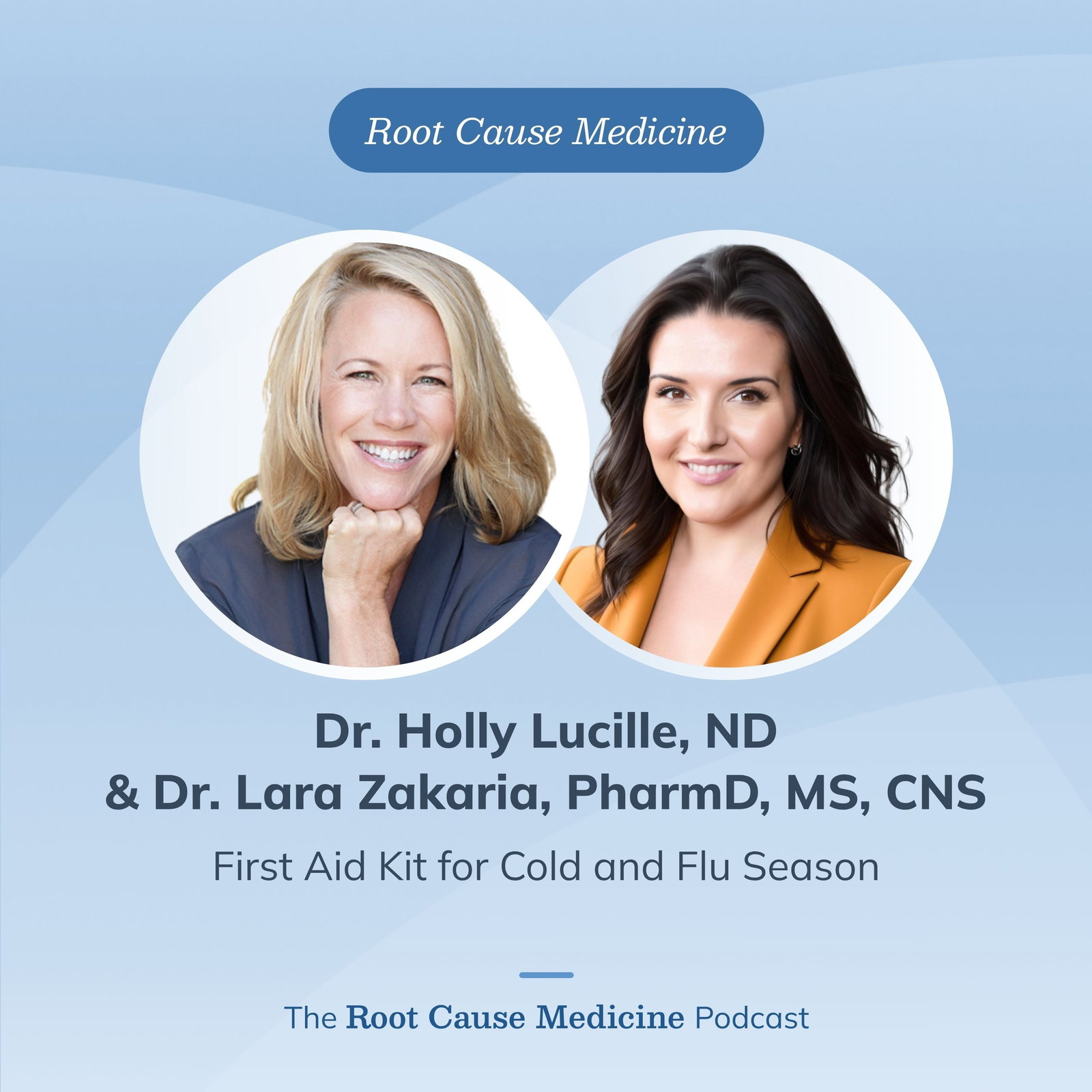
First Aid Kit for Cold and Flu Season


What to do at the first sign of a cold: an evidence-informed toolkit
Dr. Holly Lucille, ND, is joined by Lara Zakaria, PharmD, MS, CNS, to discuss what people can do when a scratchy throat, fatigue, or other early respiratory symptoms begin. The conversation covers rest and recovery, respiratory virus testing, zinc, vitamin C, elderberry, echinacea, honey, green tea, garlic, ginger, turmeric, and practical ways to prepare for cold and flu season.
Early symptoms of COVID-19, influenza, and other respiratory infections can overlap, making symptom pattern alone an unreliable way to identify the cause. Testing, individual risk factors, symptom severity, and timing can all affect the appropriate next step. (CDC 2026a) (CDC 2025)
Clinical Takeaways
- Start with the fundamentals: rest, fluids, testing when appropriate, and risk assessment. Most uncomplicated colds improve without specific treatment, and supportive measures such as adequate rest and fluids remain foundational. (CDC 2026b) Testing can help distinguish respiratory infections such as COVID-19 and influenza when the result may affect treatment or precautions, particularly for patients at higher risk of severe illness. (CDC 2025)
- Zinc and vitamin C have different levels of evidence for the common cold. Zinc has been studied extensively, particularly as lozenges started early in a cold, but results vary substantially by formulation, dose, and study design. (Nault 2024) (Hemilä 2017) (Hemilä 2020) Regular vitamin C supplementation may modestly shorten cold duration, while evidence for starting vitamin C only after symptoms appear has been less consistent. Long-term or excessive zinc supplementation also warrants attention because sustained high intake can interfere with copper status. (NIH 2022)
- Botanical evidence is ingredient- and formulation-specific. (Karsch-Völk 2014) Elderberry and echinacea have both been studied for respiratory infections, but findings are mixed and should not be generalized across products. (Wieland 2021) (Karsch-Völk 2014) (David 2019) Evidence for elderberry remains limited and uncertain, while echinacea studies vary considerably according to species, plant part, extraction method, and formulation. (Wieland 2021) (Karsch-Völk 2014) Garlic, green tea, ginger, turmeric, and honey may have nutritional or symptom-support roles, but they should not be presented as established treatments for viral respiratory infections. (Lissiman 2014) (Abuelgasim 2021)
Guest: Lara Zakaria, PharmD, MS, CNS
Lara Zakaria is a pharmacist and clinical nutritionist with a background spanning community pharmacy, functional medicine, and personalized nutrition. In this episode, she discusses how conventional pharmacy knowledge and nutrition can be brought together when thinking about early respiratory symptoms, supplement use, and practical supportive care.
Clinician FAQ
1. What should patients do when they first feel a cold coming on?
Supportive care is a reasonable starting point for uncomplicated symptoms. Rest, adequate fluids, and attention to symptom progression can help patients through a typical viral illness. Testing for COVID-19 or influenza may also be useful when results could affect treatment or precautions, particularly in higher-risk patients. (CDC 2026b) (CDC 2025)
Patients at increased risk for severe respiratory illness should contact a healthcare provider promptly because prescription antiviral treatment for influenza and COVID-19 is time-sensitive. (CDC 2026a)
2. Does zinc shorten a cold?
Possibly, but the evidence is formulation-dependent. (Nault 2024) Trials of zinc lozenges have produced conflicting findings, with some showing shorter illness duration and others showing no meaningful benefit. (Hemilä 2017) (Hemilä 2020) Differences in zinc salt, formulation, dose, timing, and lozenge composition complicate comparisons across studies. (Nault 2024)
This means findings from a specific zinc-lozenge trial should not automatically be extrapolated to zinc supplements in general. Prolonged high zinc intake can also impair copper absorption, making duration and total intake relevant to safety. (NIH 2022)
3. Should vitamin C be started when cold symptoms appear?
The evidence is stronger for regular supplementation than for starting vitamin C after symptoms begin. A large systematic review found that routine vitamin C supplementation did not substantially reduce cold incidence in the general population but was associated with modest reductions in cold duration. (Hemilä 2013) Trials starting vitamin C therapeutically after symptom onset have not demonstrated a consistent benefit. (Hemilä 2013)
Practitioners should therefore distinguish evidence for ongoing vitamin C intake from evidence for using vitamin C as an acute intervention.
4. Do elderberry and echinacea help with colds and respiratory infections?
The evidence is mixed. A systematic review of elderberry found that it may reduce the duration or severity of some viral respiratory illnesses, but the certainty of the evidence was insufficient for firm conclusions. (Wieland 2021) Echinacea research is complicated by substantial differences among preparations. (Karsch-Völk 2014) Systematic reviews and individual trials have reached differing conclusions, and some well-controlled studies have not found significant reductions in cold duration or severity. (Karsch-Völk 2014) (David 2019) Product-specific evidence matters when interpreting these findings.
5. When should respiratory symptoms prompt testing or medical evaluation?
Testing becomes particularly important when identifying COVID-19 or influenza could change treatment or precautions. (CDC 2025) Patients at higher risk for severe illness should seek healthcare promptly because antiviral treatments for influenza and COVID-19 work best when initiated early. (CDC 2026a) (CDC 2026b) Trouble breathing, chest pain or pressure, confusion, inability to stay awake, dehydration, severe weakness, or symptoms that improve and then significantly worsen warrant prompt medical assessment. (CDC 2026a)
Timestamps / Key Moments
00:03:00 Early signs that an illness may be developing
00:04:00 Temperature, heart rate, and HRV changes
00:06:35 When testing and medical evaluation may be appropriate
00:08:46 Why rest and recovery matter
00:09:55 Respiratory virus testing and RSV
00:12:15 Vitamin C and zinc
00:14:35 Vitamin C formulations and intake
00:15:24 Zinc supplements and lozenges
00:17:15 Long-term zinc intake and copper balance
00:20:30 Vitamin D status and seasonal preparation
00:22:33 Elderberry, echinacea, honey, and other botanicals
00:26:45 Symptom relief versus the underlying infection
00:30:20 Echinacea preparations
00:32:47 Green tea and EGCG
00:34:10 Garlic and allicin
00:35:15 Ginger and turmeric
00:36:49 Building a practical early-symptom toolkit
Nutrients and botanicals discussed
- Zinc
- Vitamin C
- Vitamin D
- Elderberry
- Echinacea
- Honey
- Manuka honey
- Green tea
- EGCG
- Garlic
- Allicin
- Ginger
- Turmeric
Supportive strategies discussed
- Rest and sleep
- Hydration
- Respiratory virus testing
- Monitoring symptoms
- Reviewing wearable trends
- Warm fluids and tea
- Supplement preparation before cold and flu season
- Evaluating zinc intake and copper balance
- Individualizing supplement use
Want to elevate your practice?
This episode is sponsored by Fullscript, a comprehensive care delivery platform designed to support whole-person, integrative healthcare. Fullscript helps clinicians bring supplement dispensing, lab ordering, and patient education into one centralized workflow.
For more practitioner education on supplements, nutrition, and evidence-informed clinical care, visit Fullscript Academy at academy.fullscript.com.
Disclaimer
The views expressed on this podcast are those of the host and guest and do not necessarily reflect those of Fullscript or affiliated organizations. This episode is for informational and educational purposes only and is not medical advice. Dietary supplements can cause adverse effects and interact with medications. Patients should consult a qualified healthcare professional when symptoms are severe, persistent, worsening, or when individual health conditions or medications may affect appropriate care.
References
- Abuelgasim, H., Albury, C., & Lee, J. (2021). Effectiveness of honey for symptomatic relief in upper respiratory tract infections: A systematic review and meta-analysis. BMJ Evidence-Based Medicine, 26(2), 57–64. https://doi.org/10.1136/bmjebm-2020-111336
- Centers for Disease Control and Prevention. (2025, August 18). Testing and respiratory viruses. https://www.cdc.gov/respiratory-viruses/prevention/testing.html
- Centers for Disease Control and Prevention. (2026a, September 10). About respiratory illnesses. https://www.cdc.gov/respiratory-viruses/about/index.html
- Centers for Disease Control and Prevention. (2026b, March 11). Manage common cold. https://www.cdc.gov/common-cold/treatment/index.html
- David, S., & Cunningham, R. (2019). Echinacea for the prevention and treatment of upper respiratory tract infections: A systematic review and meta-analysis. Complementary Therapies in Medicine, 44, 18–26. https://doi.org/10.1016/j.ctim.2019.03.011
- Hemilä, H., & Chalker, E. (2013). Vitamin C for preventing and treating the common cold. Cochrane Database of Systematic Reviews, 2013(1), Article CD000980. https://doi.org/10.1002/14651858.CD000980.pub4
- Hemilä, H., Fitzgerald, J. T., Petrus, E. J., & Prasad, A. (2017). Zinc acetate lozenges may improve the recovery rate of common cold patients: An individual patient data meta-analysis. Open Forum Infectious Diseases, 4(2), ofx059. https://doi.org/10.1093/ofid/ofx059
- Hemilä, H., Haukka, J., Alho, M., Vahtera, J., & Kivimäki, M. (2020). Zinc acetate lozenges for the treatment of the common cold: A randomised controlled trial. BMJ Open, 10(1), e031662. https://doi.org/10.1136/bmjopen-2019-031662
- Karsch-Völk, M., Barrett, B., Kiefer, D., Bauer, R., Ardjomand-Woelkart, K., & Linde, K. (2014). Echinacea for preventing and treating the common cold. Cochrane Database of Systematic Reviews, 2014(2), Article CD000530. https://doi.org/10.1002/14651858.CD000530.pub3
- Lissiman, E., Bhasale, A. L., & Cohen, M. (2014). Garlic for the common cold. Cochrane Database of Systematic Reviews, 2014(11), Article CD006206. https://doi.org/10.1002/14651858.CD006206.pub4
- National Institutes of Health, Office of Dietary Supplements. (2022). Copper: Fact sheet for health professionals. Retrieved October 21, 2026, from https://ods.od.nih.gov/factsheets/Copper-HealthProfessional/
- Nault, D., Machingo, T. A., Shipper, A. G., Antiporta, D. A., Hamel, C., Nourouzpour, S., Konstantinidis, M., Phillips, E., Lipski, E. A., & Wieland, L. S. (2024). Zinc for prevention and treatment of the common cold. Cochrane Database of Systematic Reviews, 2024(5), Article CD014914. https://doi.org/10.1002/14651858.CD014914.pub2
- Wieland, L. S., Piechotta, V., Feinberg, T., Ludeman, E., Hutton, B., Kanji, S., Seely, D., & Garritty, C. (2021). Elderberry for prevention and treatment of viral respiratory illnesses: A systematic review. BMC Complementary Medicine and Therapies, 21(1), 112. https://doi.org/10.1186/s12906-021-03283-5