
Dr. Kate Kresge
Dr. Holly Lucille
Dr. Lara Zakaria
Dr. Jessica Christie
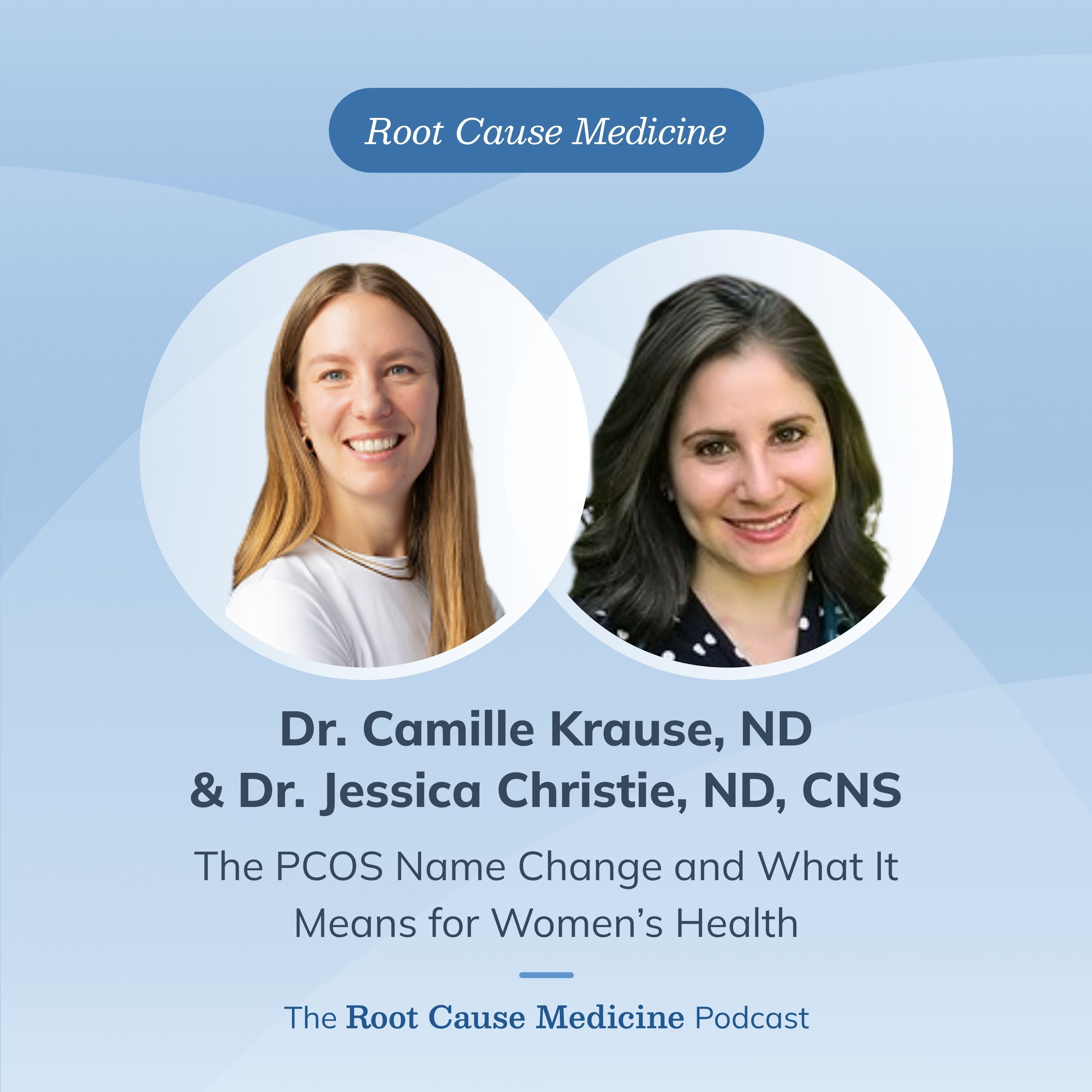
The PCOS Name Change and What It Means for Women’s Health


This episode explores one of the most significant developments in women's health in recent years: the proposed transition from Polycystic Ovary Syndrome (PCOS) to Polyendocrine Metabolic Ovarian Syndrome (PMOS). (Teede 2026) Dr. Jessica Christie and Dr. Camille Krause discuss why experts believe the traditional name no longer reflects the full complexity of the condition and how the PMOS framework better captures its endocrine, metabolic, reproductive, inflammatory, and neuroendocrine dimensions. (Teede 2026) Clinicians will learn why insulin resistance, androgen excess (Houston 2025), stress physiology, sleep, inflammation, and cardiometabolic health (Wekker 2020) are central to understanding PMOS, and how a systems-based approach can improve earlier identification, assessment, and treatment. (Teede 2026)
Clinical Takeaways from This Episode
- PMOS reflects a multisystem condition: The proposed name change recognizes that the condition extends beyond ovarian function and includes endocrine, metabolic, inflammatory, and neuroendocrine dysfunction. (Teede 2026)
- Insulin resistance is a major physiologic driver: Hyperinsulinemia may contribute to increased ovarian androgen production, ovulatory dysfunction, and metabolic symptoms, often before glucose markers become abnormal. (Houston 2025)
- PMOS is not defined by ovarian cysts: Many individuals diagnosed with PCOS do not demonstrate polycystic ovarian morphology, and the follicles observed are not true ovarian cysts. (Houston 2025) (Teede 2026)
- Early metabolic screening matters: Fasting insulin, glucose regulation, lipid markers, liver function, and cardiometabolic risk factors may shift years before overt disease develops. (Houston 2025) (Teede 2026)
- Clinical presentations vary widely: Symptoms may include irregular cycles, infertility, acne, hirsutism, hair thinning, fatigue, mood changes, sleep disruption, dyslipidemia, and fatty liver patterns. (Manzano-Nunez 2023) Lean PMOS can occur and is often overlooked. (Zheng 2025)
- Treatment requires a whole-person approach: Nutrition, movement, sleep, stress regulation, inflammation management, and metabolic support should be considered alongside conventional treatment options. (Teede 2023)
Guest Introduction
Dr. Camille Krause is a Naturopathic Doctor with a clinical focus on fertility, women’s hormones, and nutrition. She works collaboratively with fertility physicians to provide evidence-based, complementary care, using specialized testing, nutrition, botanical medicine, lifestyle interventions, and acupuncture to support reproductive health. Dr. Krause is a member of the Canadian and Ontario Associations of Naturopathic Doctors. She holds an Honours Bachelor of Science from the University of Toronto and completed her naturopathic training at the Canadian College of Naturopathic Medicine.
Website: https://www.conceivehealth.com/staff/camille-krause-naturopathic-doctor/
Instagram: @waterloo_fertility_naturopath
Labs Mentioned
- Fasting insulin
- Fasting glucose
- Hemoglobin A1c (HbA1c)
- Lipid panel
- Liver enzymes
- Testosterone
- DHEA-S
- Sex Hormone Binding Globulin (SHBG)
- Thyroid markers
- Blood pressure
- Waist circumference assessment
Lifestyle & Exercise Strategies Mentioned
- Blood sugar stabilization
- Higher protein intake
- Increased dietary fiber intake
- Resistance training
- Regular movement and exercise
- Sleep optimization
- Circadian rhythm support
- Nervous system regulation
- Stress management
- Inflammation reduction strategies
- Nutrient sufficiency
- Recovery optimization
Clinician FAQ
1. Why is PCOS being renamed PMOS?
The proposed term Polyendocrine Metabolic Ovarian Syndrome better reflects the endocrine, metabolic, reproductive, and inflammatory aspects of the condition rather than focusing primarily on ovarian findings. (Teede 2023)
2. Are ovarian cysts required for diagnosis?
No. Many individuals diagnosed with PCOS do not have polycystic ovarian morphology. The follicles seen on imaging are generally immature follicles associated with disrupted ovulation rather than true ovarian cysts. (Teede 2026) (Houston 2025)
3. Why is fasting insulin clinically important in PMOS?
Elevated insulin levels may occur years before fasting glucose or HbA1c become abnormal and can contribute directly to ovarian androgen production and ovulatory dysfunction. (Houston 2025)
4. What systems are involved in PMOS?
PMOS may involve insulin signaling, androgen regulation, neuroendocrine function, inflammatory pathways, reproductive physiology, sleep, circadian rhythms, and cardiometabolic health. (Teede 2026) (Wekker 2020)
5. Can patients have PMOS without obesity?
Yes. Lean PMOS exists and may be underrecognized. Patients can experience reproductive, metabolic, and hormonal symptoms across a wide range of body compositions. (Zheng 2025)
6. What are the current diagnostic criteria?
Current criteria include combinations of:
- Ovulatory dysfunction or irregular cycles
- Clinical or biochemical hyperandrogenism
- Polycystic ovarian morphology or elevated AMH in adults
Adolescents generally require the first two criteria rather than ovarian imaging findings. (Teede 2023)
7. Why is diagnosis often delayed?
Presentations vary substantially, and many patients do not fit traditional stereotypes. Symptoms may emerge years before fertility concerns arise, contributing to missed or delayed diagnosis. (Gibson-Helm 2017)
8. What is the role of lifestyle medicine in PMOS?
Lifestyle interventions targeting blood sugar regulation, nutrition, physical activity, sleep, stress physiology, and inflammation are foundational components of a whole-person treatment strategy. (Teede 2023)
Conversation Topics
- The decade-long effort behind the name change
- Why the old terminology was biologically inaccurate
- Understanding PMOS as a multisystem condition
- Insulin resistance and androgen excess
- The role of inflammation, sleep, and stress physiology
- Lean PMOS and underrecognized presentations
- Current diagnostic criteria and clinical considerations
- Root-cause laboratory assessment strategies
- Whole-person treatment approaches for PMOS
- Why lifestyle medicine remains foundational
- The future of women's endocrine and metabolic care
Timestamps
00:00 - Why the shift from PCOS to PMOS matters
02:10 - How language shapes diagnosis and care
03:29 - Why the old terminology missed the bigger picture
05:18 - The root physiology of PMOS
07:47 - How PMOS can present beyond the stereotypical picture
09:33 - Why diagnosis requires a deeper clinical lens
11:23 - A whole-person approach to PMOS care
12:25 - Why this shift is so meaningful for patients and practitioners
Want to elevate your practice? This episode is sponsored by Fullscript, a comprehensive care delivery platform designed to support whole-person, integrative healthcare. Fullscript allows clinicians to streamline supplement dispensing, lab ordering, and patient education in one free, centralized system—helping reduce administrative burden while supporting clinical decision-making. For practitioners, Fullscript offers access to professional-grade supplements, evidence-informed protocols, and lab integrations that can support more efficient planning and follow-up. For patients, it provides a clear, organized way to receive recommendations, manage refills, and stay engaged in their care. The goal is not to replace clinical judgment, but to make it easier for clinicians to focus on what matters most: thoughtful, individualized patient care.
Disclaimer
The views expressed on this podcast are those of the hosts and guests and don’t necessarily reflect those of Fullscript or any affiliated organizations. This podcast is for informational and educational purposes only and is not intended to be medical advice. For your safety, always check with your doctor or healthcare provider before making changes to your health routine.
References
- Gibson-Helm, M., Teede, H., Dunaif, A., & Dokras, A. (2017). Delayed diagnosis and a lack of information associated with dissatisfaction in women with polycystic ovary syndrome. The Journal of Clinical Endocrinology & Metabolism, 102(2), 604–612. https://doi.org/10.1210/jc.2016-2963
- Houston, E. J., & Templeman, N. M. (2025). Reappraising the relationship between hyperinsulinemia and insulin resistance in PCOS. Journal of Endocrinology, 265(2), e240269.
- Manzano-Nunez, R., Santana-Dominguez, M., Rivera-Esteban, J., Sabiote, C., Sena, E., Bañares, J., Tacke, F., & Pericàs, J. M. (2023). Non-alcoholic fatty liver disease in patients with polycystic ovary syndrome: A systematic review, meta-analysis, and meta-regression. Journal of Clinical Medicine, 12(3), 856. https://doi.org/10.3390/jcm12030856
- Teede, H. J., Tay, C. T., Laven, J. J. E., Dokras, A., Moran, L. J., Piltonen, T. T., Costello, M. F., Boivin, J., Redman, L. M., Boyle, J. A., Norman, R. J., Mousa, A., & Joham, A. E. (2023). Recommendations from the 2023 international evidence-based guideline for the assessment and management of polycystic ovary syndrome. The Journal of Clinical Endocrinology & Metabolism, 108(10), 2447–2469. https://doi.org/10.1210/clinem/dgad463
- Teede, H. J., Khomami, M. B., Morman, R., Laven, J. S. E., Joham, A. E., Costello, M. F., Patil, M., Rees, D. A., Berry, L., Cree, M. G., Zhao, H., Norman, R. J., Dokras, A., & Piltonen, T. (2026). Polyendocrine metabolic ovarian syndrome, the new name for polycystic ovary syndrome: A multistep global consensus process. The Lancet. Advance online publication.
- Wekker, V., van Dammen, L., Koning, A., Heida, K. Y., Painter, R. C., Limpens, J., & Hoek, A. (2020). Long-term cardiometabolic disease risk in women with PCOS: A systematic review and meta-analysis. Human Reproduction Update, 26(6), 942–960.
- Zheng, C., Lin, Y., Zhang, Z., Ye, J., Lin, Y., & Tian, J. (2025). Analyzing and evaluating the metabolic and endocrine characteristics between lean and obese patients with polycystic ovary syndrome: A systematic review and meta-analysis. Frontiers in Endocrinology, 16, 1680685.