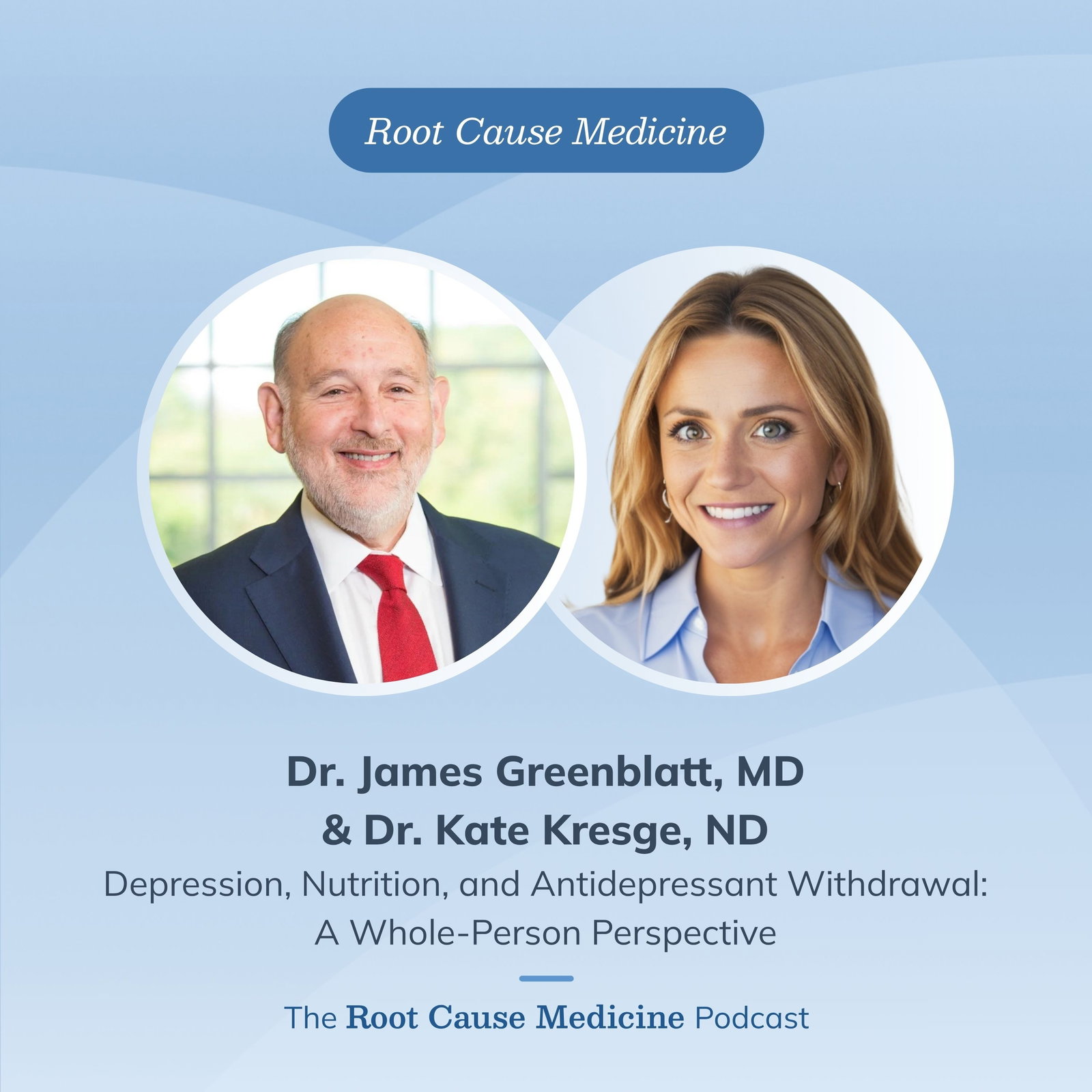

Dr. Kate Kresge
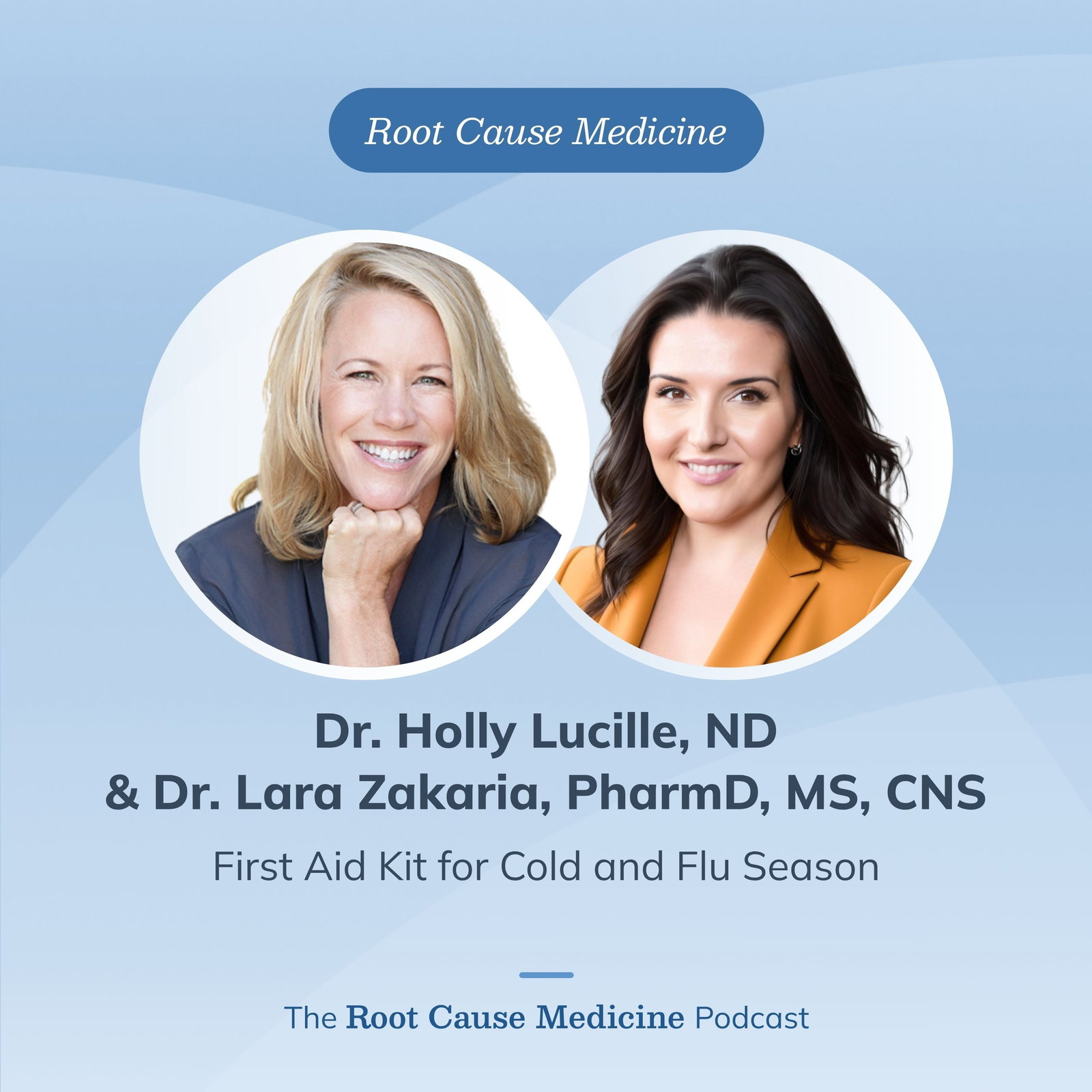
Dr. Holly Lucille
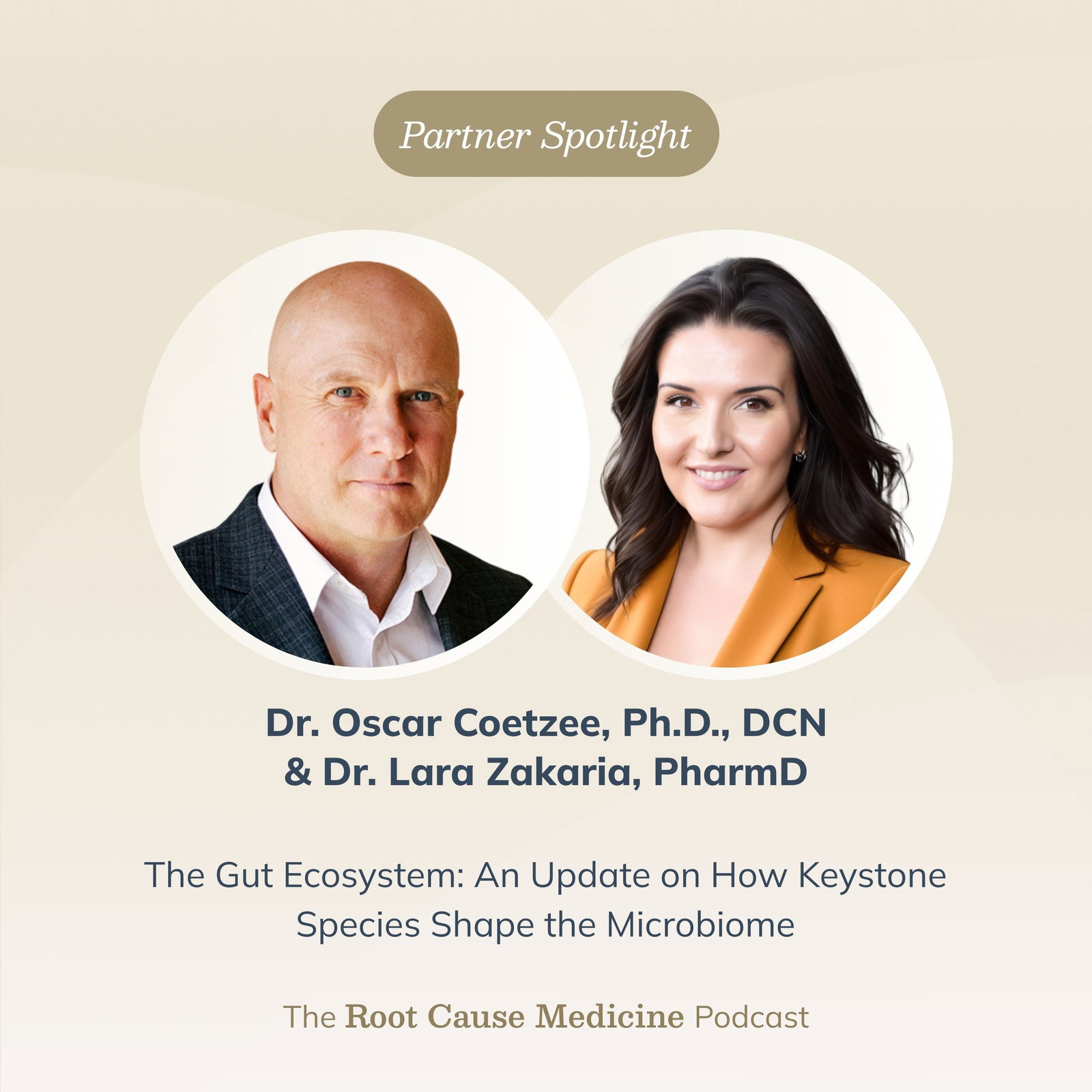
Dr. Lara Zakaria
Dr. Jessica Christie
Depression, Nutrition, and Antidepressant Withdrawal: A Whole-Person Perspective


Dr. Kate Kresge is joined by psychiatrist James Greenblatt, MD, to discuss themes from his book Finally Hopeful, including nutrition, depression, laboratory assessment, and antidepressant withdrawal.
Clinical Takeaways
- Depression warrants a broad clinical assessment. Symptoms may overlap with medical conditions and nutritional deficiencies. (Bode 2021) (Lee 2020) (Bender 2017) The episode discusses thyroid function, iron, vitamin B12, folate, vitamin D, and other factors as part of a broader evaluation—not as universal causes of depression.
- Antidepressant discontinuation should be individualized. Abruptly stopping an antidepressant can cause withdrawal symptoms. (Henssler 2024) (Horowitz 2019) Gradual, clinician-supervised tapering is important; nutritional status may also be considered, although supplementation has not been established as a way to prevent withdrawal. (Horowitz 2019)
- Nutrition can be considered within whole-person mental healthcare. Protein, amino acids, omega-3 fatty acids, B vitamins, zinc, and magnesium are discussed. Testing and supplementation should reflect individual needs rather than assuming a common deficiency.
Guest: James Greenblatt, MD
James Greenblatt, MD, is a psychiatrist and educator in integrative and functional psychiatry. He discusses a whole-person framework for evaluating depression, nutritional status, and antidepressant discontinuation.
Clinician FAQ
1. Can nutritional deficiencies contribute to depressive symptoms?
Yes, nutritional status can be clinically relevant, but depression is multifactorial. (Bender 2017) (Malhi 2018) The episode discusses iron, vitamin B12, folate, vitamin D, zinc, and other nutrients clinicians may evaluate when appropriate.
2. Why distinguish antidepressant withdrawal from depression?
Withdrawal can occur when antidepressants are reduced or stopped, and symptoms may overlap with psychiatric symptoms. (Henssler 2024) (Horowitz 2019) Distinguishing withdrawal from recurrence of depression is important during discontinuation. (Horowitz 2019)
3. Should nutritional status be assessed before antidepressant tapering?
The episode proposes evaluating nutritional status before and during tapering. Medication changes should be individualized and managed with the prescribing clinician.
4. What role do amino acids play in mental health?
Amino acids from dietary protein are precursors for many biologically important molecules, including neurotransmitters. (Tang 2025) The episode discusses amino acid assessment as part of Dr. Greenblatt’s clinical approach.
5. Why screen for medical conditions in patients with depression?
Some medical conditions may produce symptoms that resemble or coexist with depression. (Bode 2021) (Lee 2020) (Clappison 2020) The episode highlights thyroid disorders, anemia, and celiac disease as examples clinicians may investigate when clinically indicated.
Key Moments
03:44 Whole-person framework for depression
07:46 Antidepressant withdrawal
11:29 Nutritional assessment before tapering
23:23 Amino acids and nutrition
37:26 B vitamins and minerals
46:15 Depression and celiac disease case
Disclaimer
The views expressed on this podcast are those of the hosts and the guests, and they don't necessarily reflect the views of FullScript or any affiliated organizations. This podcast is for informational and educational purposes only, and it's not intended to be medical advice. For your safety, always check with your healthcare provider before making any changes to your healthcare routine.
References
- Bender, A., Hagan, K. E., & Kingston, N. (2017). The association of folate and depression: A meta-analysis. Journal of Psychiatric Research, 95, 9–18. https://doi.org/10.1016/j.jpsychires.2017.07.019
- Bode, H., Ivens, B., Bschor, T., Schwarzer, G., Henssler, J., & Baethge, C. (2021). Association of hypothyroidism and clinical depression: A systematic review and meta-analysis. JAMA Psychiatry, 78(12), 1375–1383. https://doi.org/10.1001/jamapsychiatry.2021.2506
- Clappison, E., Hadjivassiliou, M., & Zis, P. (2020). Psychiatric manifestations of coeliac disease, a systematic review and meta-analysis. Nutrients, 12(1), 142. https://doi.org/10.3390/nu12010142
- Henssler, J., Schmidt, Y., Schmidt, U., Schwarzer, G., Bschor, T., & Baethge, C. (2024). Incidence of antidepressant discontinuation symptoms: A systematic review and meta-analysis. The Lancet Psychiatry, 11(7), 526–535. https://doi.org/10.1016/S2215-0366(24)00133-0
- Horowitz, M. A., & Taylor, D. (2019). Tapering of SSRI treatment to mitigate withdrawal symptoms. The Lancet Psychiatry, 6(6), 538–546. https://doi.org/10.1016/S2215-0366(19)30032-X
- Lee, Y.-J., & Kim, H.-B. (2020). Association between anaemia and adult depression: A systematic review and meta-analysis of observational studies. Journal of Epidemiology and Community Health, 74(7), 565–572. https://doi.org/10.1136/jech-2020-213842
- Malhi, G. S., & Mann, J. J. (2018). Depression. The Lancet, 392(10161), 2299–2312. https://doi.org/10.1016/S0140-6736(18)31948-2
- Tang, J., Krushelnycky, L., Shaqo, A., & Cho, C. E. (2025). A comprehensive review of nutritional influences on the serotonergic system. Advances in Nutrition, 16(11), 100524. https://doi.org/10.1016/j.advnut.2025.100524