
Dr. Kate Kresge
Dr. Holly Lucille
Dr. Lara Zakaria
Dr. Jessica Christie
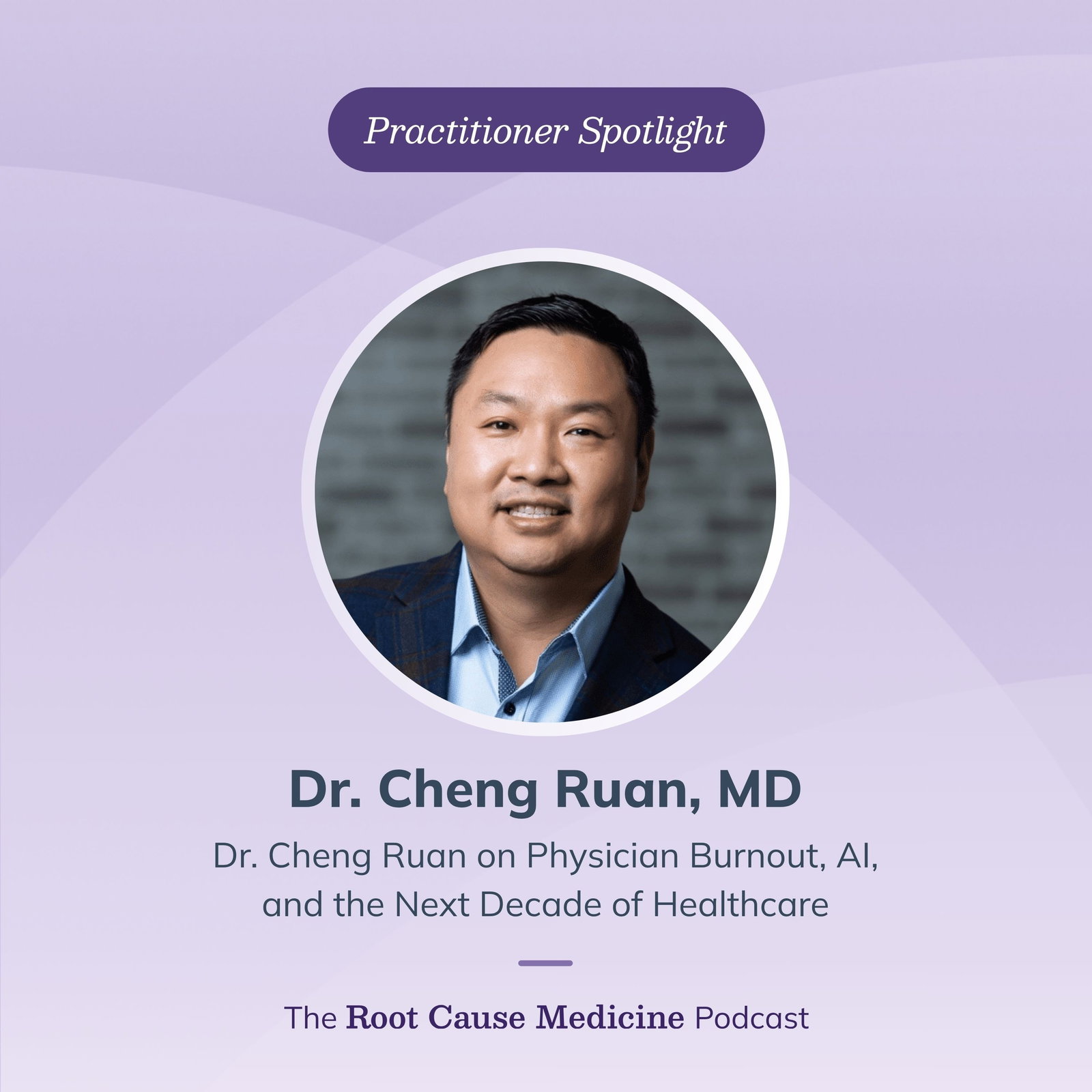
Dr. Cheng Ruan on Physician Burnout, AI, and the Next Decade of Healthcare


Dr. Cheng Ruan is a fascinating physician on the leading edge of medicine, and in this episode we explore his story, how he thinks, and what he sees coming next in healthcare. What I loved most about this conversation is how it expands the way we think about practicing medicine - beyond protocols and productivity into something more human and sustainable. While we touch on integrative care, insurance models, and AI, the deeper thread is that physicians are being asked to evolve - not just clinically, but personally and systemically. Dr. Ruan reminds us that care isn’t just about what we prescribe, but how we listen, communicate, and design the environments we work in. It’s an invitation to step back and ask: what kind of medicine are we building, and does it truly support both our patients and ourselves?
Guest Introduction
Dr. Cheng Ruan, MD, is the founder of the Texas Center for Lifestyle Medicine, an integrative, insurance-based practice focused on chronic disease, mind-body medicine, and personalized care. He is also the co-founder of the Physician Transformation Institute, where he works with clinicians to address burnout, reconnect with purpose, and explore new ways of practicing medicine. His work sits at the intersection of clinical care, systems design, and emerging technology.
Key Moments from This Episode
- From transactional to transformational care: Dr. Ruan shares a pivotal moment early in his career that led him to rethink the purpose of clinical practice and move toward a more patient-centered, root-cause approach.
- Medicine as a system, not a set of diagnoses: He introduces the idea of viewing health through a systems-based “flowchart,” focusing on upstream drivers rather than isolated conditions.
- Reframing physician burnout: The conversation shifts burnout from a workload issue to something deeper—touching on identity, alignment, and meaning in medicine.
- Building an insurance-based integrative model: He walks through how he created a lifestyle medicine practice that operates within traditional reimbursement structures.
- Group care as a tool for chronic disease: Dr. Ruan highlights how cohort-based care models may support patient engagement, accountability, and long-term behavior change.
- AI as a support layer in clinical practice: The episode explores how AI can assist with education, workflows, and communication - while emphasizing the need for thoughtful implementation.
- Digital twins and patient experience: He introduces the concept of clinician “digital twins” as a way to extend communication and improve access while maintaining consistency in care delivery.
- Raising resilient kids in an uncertain world: The conversation closes on a personal note, focusing on how to support the next generation through emotional safety, curiosity, and critical thinking.
Timestamps
- 00:00 – Introduction to Dr. Cheng Ruan and his work
- 02:29 – Early life and integrative medicine background
- 05:21 – Systems thinking and reimagining clinical care
- 09:20 – Behavioral observation and patient insight
- 20:54 – Physician burnout and meaning in medicine
- 24:31 – Community, retreats, and clinician support
- 42:42 – AI in healthcare and patient communication
- 47:40 – Safety considerations and AI guardrails
- 58:16 – The future of medicine and education
- 01:06:23 – Inside his clinical model and practice design
Want to elevate your practice?
This episode is sponsored by Fullscript, a comprehensive care delivery platform designed to support whole-person, integrative healthcare. Fullscript allows clinicians to streamline supplement dispensing, lab ordering, and patient education in one free, centralized system—helping reduce administrative burden while supporting clinical decision-making. For practitioners, Fullscript offers access to professional-grade supplements, evidence-informed protocols, and lab integrations that can support more efficient planning and follow-up. For patients, it provides a clear, organized way to receive recommendations, manage refills, and stay engaged in their care. The goal is not to replace clinical judgment, but to make it easier for clinicians to focus on what matters most: thoughtful, individualized patient care.
Disclaimer
The views expressed on this podcast are those of the hosts and the guests, and they don't necessarily reflect the views of Fullscript or any affiliated organizations. This podcast is for informational and educational purposes only, and it's not intended to be medical advice. For your safety, always check with your healthcare provider before making any changes to your healthcare routine.
Citations
- West CP, Dyrbye LN, Erwin PJ, Shanafelt TD. Interventions to prevent and reduce physician burnout: a systematic review and meta-analysis. Lancet. 2016;388(10057):2272-2281.
- Zhang X, Li L, Zhang Q, Le LH, Wu Y. Physician Empathy in Doctor-Patient Communication: A Systematic Review. Health Commun. 2024 May;39(5):1027-1037. doi: 10.1080/10410236.2023.2201735. Epub 2023 Apr 16. PMID: 37062918.
- Tang MY, Graham F, O'Donnell A, Beyer F, Richmond C, Dhami R, Sniehotta FF, Kaner EFS. Effectiveness of shared medical appointments delivered in primary care for improving health outcomes in patients with long-term conditions: a systematic review of randomised controlled trials. BMJ Open. 2024 Mar 7;14(3):e067252. doi: 10.1136/bmjopen-2022-067252. PMID: 38453205; PMCID: PMC10921542.